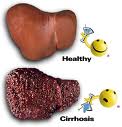
Cirrhosis refers to severe scarring of the liver that develops when the liver is subjected to chronic, repeated or sustained injury.
The liver is a vital organ. Its cells, known as hepatocytes, perform numerous metabolic functions.
Under normal conditions, the liver can regenerate itself, which means hepatocytes that are injured and die are replaced by new hepatocytes that then can take over the function of the dead ones.
However, in cases of chronic and repeated injury, the liver is not able to regenerate itself. Instead, the hepatocytes that are lost or replaced not by other hepatocytes but by non functioning scar tissue, which overtime leaves the liver severely scarred a condition called cirrhosis.
Cirrhosis has various causes, the more common are: habitual alcohol consumption; chronic hepatitis B, C and A; and non alcoholic fatty liver disease, a condition that is associated with obesity, diabetes, malnutrition and certain drugs such as steroids.
Less common causes of cirrhosis include prolonged exposure to toxic chemicals, parasitic infections, auto immune liver hepatitis disease and certain relatively rare inherited liver diseases such as cystic fibrosis and hemochromatosis.
Alcoholic cirrhosis is not a contagious liver disease but some that causes it are, like viral hepatitis. The liver damage that accompanies cirrohsis is irreversible. The goals of treatment are to slow down or stop the formation of scar tissue and prevent or manage the life threatening complications of the disease.
Inasmuch as cirrhosis can be caused by a variety of factors, the specific treatment of the condition depends on the underlying cause.
 The common complications of cirrohsis, which appear only when much of the liver has already been damaged, include bleeding that can be secondary to the failure of the liver to produce enough blood, clotting factors or to portal hypertension due to the obstruction of the vein that brings blood from digestive tract to the liver, jaundice; hepatic encephalopathy that results from the build up in the brain of the toxins that the liver fails to remove from blood; susceptibility to infections; lung and kidney failure; and liver cancer.
Cirrhosis of the liver precedes 80% of all liver cancers, thus any conditions that predisposes to cirrhosis indirectly causes liver cancer.