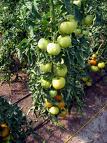
In tropical countries tomatoes do not grow well during the rainy season. They are often affected by insects and diseases that thrive during the rainy months.
It is for this reason that plant experts are working around the clock looking for technologies that can make growing tomatoes viable during the wet season.
Growing tomatoes inside a greenhouse is one option. Though building one is expensive using the pre-engineered materials, however one can offset the cost by utilizing the local indigenous materials instead, that is cheaply available locally, a greenhouse framing made of coco lumber materials, one can save as much as sixty percent of the total cost.
Second option, is to opt for tomato hybrid varieties that is resistant to rainy condition. The one that does not only perform well during the rainy season but also during the summer season.
It should be a heat tolerant variety so that fruit will set well under hot conditions. It should be a high yielding variety that enable farmers to make money even if the price for the harvests is not that good, it is still a profitable endeavor.
A two thousand five hundred square meter of lot can accommodate around six thousand seedlings of the hybrid variety. The cost of the seeds was around twenty US dollars.
Barely fifty four days after planting one can make their first harvest initially at seventeen kilos, at ninety six kilos after three days and the harvest yield is in progression up to its eight harvest that already yield around seven hundred fifty kilos where they have already recovered all their expenses with a good profit to boot.
In planting hybrid tomato, a thorough land preparation is foremost, the hybrid seedlings planted in somewhat elevated rows distanced one meter apart and one half meter apart in the rows. The plants are kept upright by means of string trellises kept in place by a series of bamboo stakes.
The slightly elevated rows make it convenient to irrigate the plants weekly if plant during the the summer season. Use plastic mulch on the planting beds to moderate the entry of rain water into the soil during the rainy season. By mulching, this will also keep down the weeds grow fast during the rainy season.
The plants are also fertilized every fifteen days by applying a combination of urea (75%) and muriate of potash (25%). Farmers could expect much better price for their harvests during the rainy season although the risk of bad weather condition like typhoons could affect the crops, it is something that farmers has to contend with especially in tropical countries.