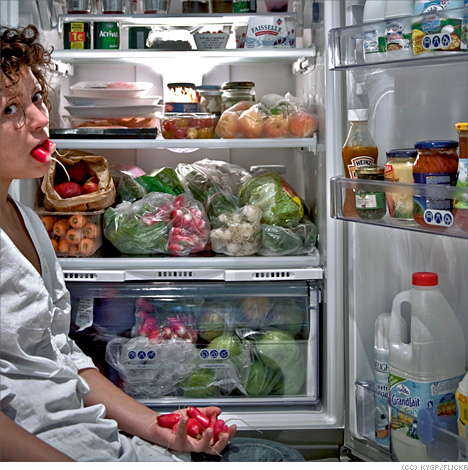
The key to keeping your food fresh is to classify and regroup the items that the smell of one food does not spread to others.
*** Fruits and vegetables – Store them in a perforated or unsealed plastic bags to maintain them in a moist environment yet still allow air to circulate. If you wash them let it dry prior placing them into the refrigerator. Don’t mix them up, fruits and vegetables give off different gases that can cause others to deteriorate.
*** Meat, Fish and Poultry – Fresh meat, fish and chicken you have just bought from the market should be washed. Wash and store them separately. Place them respectively in a clean plastic wrapper before putting them separately in a freezer.
Don’t mix them up but put them in a wrapper or container separately. For fish other than fish fillet be sure that the internal organs and scales are taken out and the fish is thoroughly clean.
In storing them in a freezer be sure to synchronize them in accordance to your need in the kitchen. For items need immediate cooking put them in a conspicuous place for easy retrieval from the freezer so that you would not end up retrieving other items that you don’t need.
It is important that a menu for the week to guide you exactly of how you would store them. Allocate your food in a specific serving so that you would not end up defrosting items more than what you need.
*** Milk, cheese, yogurt etc. – Leave cottage cheese, yogurt, cream, milk or other dairy products in the container or packaging they came in.
However, after transferring them say milk to a pitcher or sour cream to a serving bowl, don’t return them back to the original container to avoid contamination or spoiling the remaining content.
Instead tightly cover the pitcher or the bowl with a plastic wrap. Hard cheese should be stored in its original packaging, once used wrap them in wax paper, foil or loose plastic.
*** Left-overs – Store them in airtight, clear containers or wraps. Divide left-overs into small, flat containers so that they cool faster. Some bacteria spores survive the cooking process and may germinate if the food is at room temperature long enough. Refrigerate left-overs within two hours of cooking or wait for foods to cool down before storing them.
Don’t refrigerate left-overs in cans like sauce or any other foods once opened. They would leave a metallic taste to the food. Don’t overload your refrigerator with food stuff. Cool air needs to circulate to keep food at a safe temperature.